Nobody wrote down what became of the other nine. This is one of them, as I imagine him.
For four years I did not touch anyone I loved.
Leprosy does not hurt, and that is the cruel part of it. You stop feeling the hot coal and the thorn. What still hurt was my daughter. She was three when I left the house, and I could no longer remember what her hand felt like in mine.
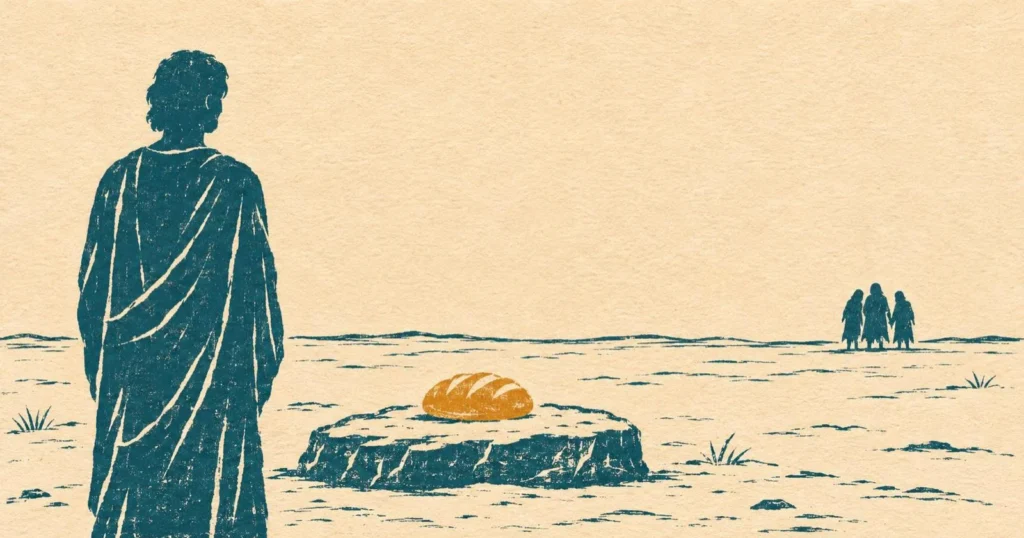
There were ten of us at the edge of a village between Samaria and Galilee, nine of my own people and one Samaritan. At home I would never have eaten at his table. Out there we shared the bread people left for us on a stone, a long way off, before they walked away without looking at us.
That day the Teacher came through. We shouted from a distance, the way we had to: “Jesus, Master, have mercy on us!”
He looked at us from where he stood and said, “Go and show yourselves to the priests.”
So we went, still sick.
On the road I looked down at my hands, and the skin was whole. I picked up a rock and squeezed it in my fist until it hurt, and I laughed out loud because it hurt.
We ran, all of us. Only the Samaritan stopped. He turned to face the village and started back, praising God at the top of his voice. I saw him over my shoulder and kept running. My daughter was seven by then.
When the priests had declared me clean, I went home. She hid behind her mother first. Then she came out and laid her palm on my cheek, and left it there.
Later the Samaritan told me what the Teacher had asked, back in the village: “Weren’t the ten cleansed? But where are the nine?”
He said the Teacher asked it like a man who had set ten places at the table.
I went looking for the Teacher then, but he had gone on, and I never got to thank him to his face.
I know where the lepers stay, though. Every week I take bread to the edge of the village and leave it on the stone. Then I sit down where they can see me, and I wait until they look up.