
Blessed are the meek: for they shall inherit the earth.
Matthew 5:5 (KJV)
Meek in modern English means mild, and that is not what the beatitude is offering. The quickest way to see it is to find the one man in the Old Testament the same word is used of.
Jesus is quoting a psalm
Jesus is not coining this. He is quoting a psalm, and the Greek he uses matches the Greek Old Testament word for word on all three of the words that matter.
But the meek shall inherit the earth; and shall delight themselves in the abundance of peace.
Psalm 37:11 (KJV)
Meek, inherit, earth. Same three in both, and the Hebrew behind meek in the psalm is anav, which turns the question into what anav describes. In the Old Testament the word almost always describes a group, the meek or the humble or the poor taken together, exactly as the psalm uses it. Numbers 12:3 breaks the pattern and attaches it to an individual the text names.
Moses is the one man called by it
Now the man Moses was very meek, above all the men which were upon the face of the earth.
Numbers 12:3 (KJV)
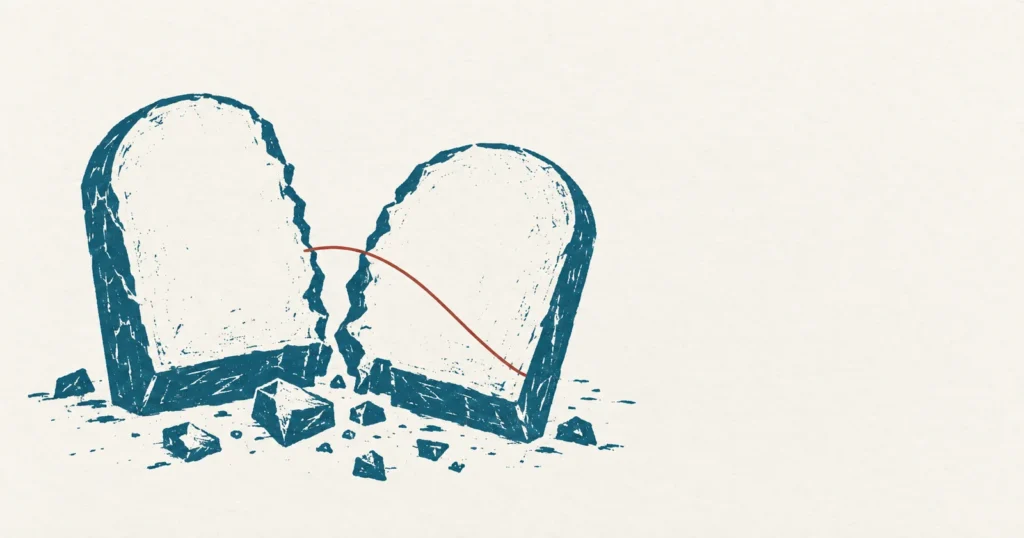
The same word, and it sits oddly beside what the same books record him doing. He comes down the mountain, sees the calf, and his anger waxes hot. He throws the tablets of the law down and breaks them. He burns the calf, grinds it to powder, scatters it on the water and makes Israel drink it. Later he stands in front of the whole congregation and calls them rebels, and strikes a rock he had been told to speak to, and is told he will not enter the land for it.
And one chapter before he is called meek, he tells God the burden is too heavy, asks why he has been treated this way, and says that if this is how it is going to be, kill me now. Whatever the word means, it does not mean mild.
And here is the thing he does not do
Here is the one thing missing from that list, and it sits in the chapter where the word appears. Miriam and Aaron come at him. They start with his marriage, and then they get to the real complaint: has the Lord spoken only by Moses, has he not spoken also by us. The text adds that the Lord heard it. That is a challenge to the one thing he had.
Moses says nothing in his own defense. The verse about meekness is the narrator’s note dropped into that silence, and the next thing that happens is that the Lord answers for him. Which makes the pattern a direction rather than a temperament: the man who smashed the tablets over an idol will not defend his own position when his own family attacks it, being loud about God’s honor and silent about his own.
Lexicons help a little and settle nothing
The Greek word in Matthew is praus, and the entry the concordances print opens with mildness of disposition, and that is where the modern reading starts. The same entry then describes the Old Testament sense as those relying wholly on God rather than on their own strength to defend them against injustice.
The Hebrew entry in Brown-Driver-Briggs is blunter and less interested in temperament. It gives poor, humble, afflicted, needy, weak, and its root is the verb for being afflicted, which describes a position and not a personality. A man can arrive at that position without being consulted.
The New American Standard and the World English Bible decline meek altogether and print gentle. The New Living Translation prints humble. Nobody has a clean word for it in English, and somebody ought to say so before a sermon gets built on one.
Jesus uses it of himself, and Matthew of a king
The adjective appears four times in the New Testament, counting a variant spelling that concordances file under a number of its own: in this beatitude, in Peter’s letter about a meek and quiet spirit, in the invitation where Jesus says take my yoke upon you for I am meek and lowly in heart, and once where Matthew is quoting a prophet about a king riding in. Behold, thy King cometh unto thee, meek, and sitting upon an ass. That is the triumphal entry, and the word is describing a man riding into his own capital to be acclaimed, and nobody would call that scene timid.
Inherit the earth is not a small promise
They shall inherit the earth. Not a corner of it, and not a consolation prize. Read the psalm and the verses around it are about the wicked being cut off, so the promise reverses the arrangement instead of softening it. The people described are not getting a small thing quietly. They are getting the whole estate, later, from somebody else’s hand.
Which is the point of the word. The man it describes has stopped arranging his own defense, because somebody else has taken the case. The disciples were given the same shape of answer when they asked who then can be saved.
Job did the same thing loudly, complaining at length and refusing to accept his friends’ accounting, and God said at the end that he had spoken rightly. What James calls Job’s patience is a Greek word for holding out, and meekness is a different word again. Both of them hand the verdict to God.
Moses does speak once in Numbers 12, and what he says is a prayer for the sister who came at him. Miriam is struck with leprosy, Aaron begs him to do something, and Moses cries unto the Lord: Heal her now, O God, I beseech thee.